

Uganda’s Silk Ambition Takes Shape in Kween as Minister Calls for a Complete Value Chain

By John Jimmy Musimbi
Public Relations and Communications Officer, Tropical Institute of Development Innovations (TRIDI)
KWEEN DISTRICT, Uganda | 21 October 2026
Uganda’s ambition to build a silk industry will depend on more than a factory. It will require skilled farmers, functional silkworm rearing facilities, reliable water supplies and a market that ensures the people producing the raw materials benefit from their work.
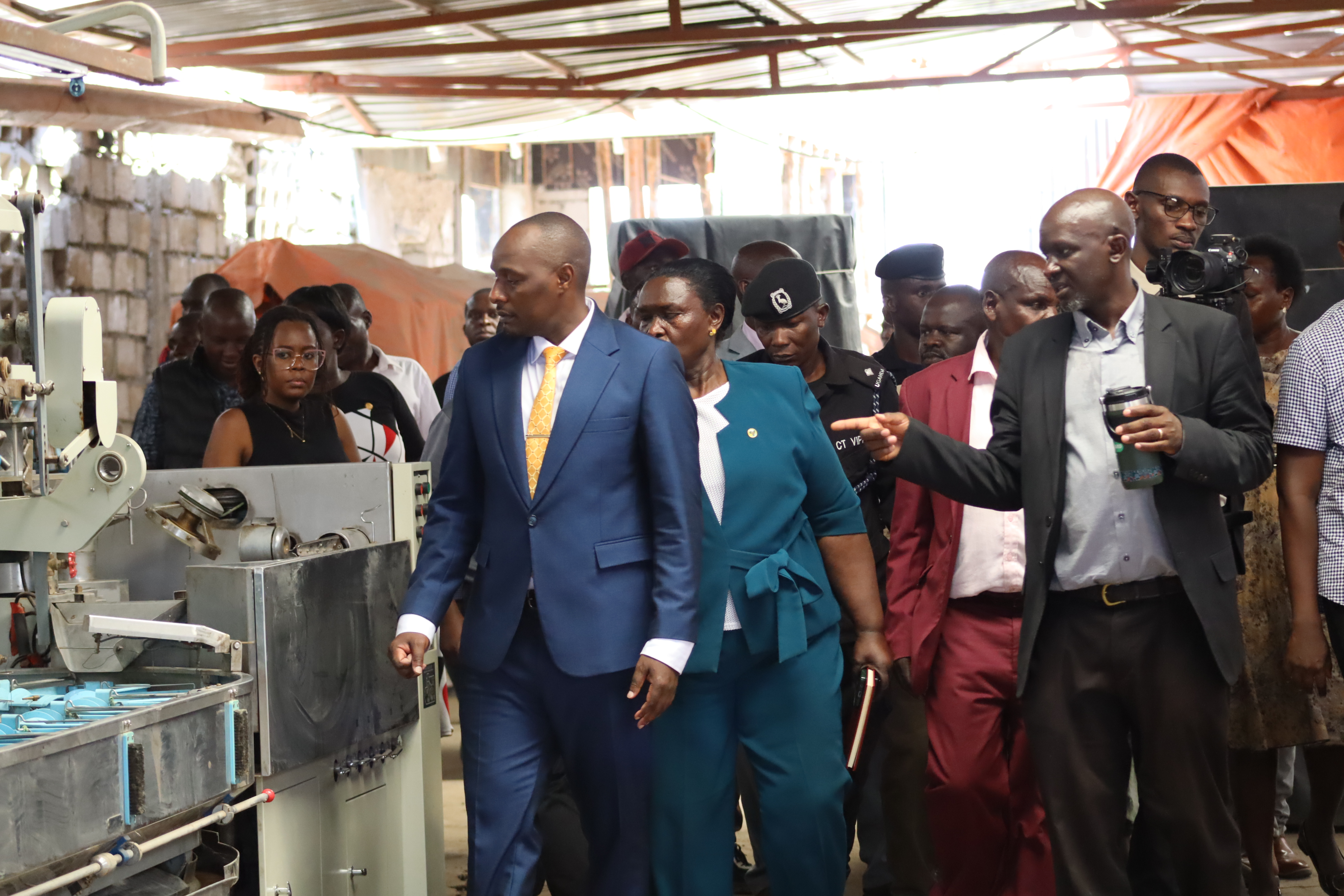
That was the message from the Minister of Science, Technology and Innovation, Hon. Eng. Jonard Asiimwe Akiiki, during an oversight visit to the Tropical Institute of Development Innovations (TRIDI)’s Chepsukunya Silk Farm and Factory in Kween District on Wednesday, 21 October 2026.
The visit brought together national and district leaders, technical officers, TRIDI management, farmers and community members to assess progress on the sericulture project, identify outstanding challenges and discuss how the emerging enterprise can deliver lasting benefits to the Sebei sub-region.
The Minister acknowledged the progress made at the site but challenged TRIDI to focus on completing the essential links in the silk value chain so that the project can move towards a functional, market-oriented enterprise.
“The silk industry needs a complete value chain,” was the central message of his remarks, as he emphasised the need for functional rearing houses, technically skilled farmers and a market for the products.
From mulberry gardens to market opportunities
At Chepsukunya, the foundations of a silk enterprise are taking shape. The project has seen infrastructure development, including road construction and the extension of electricity, while machinery has been installed at the factory.
However, turning this investment into a functioning silk industry requires the different stages of production to work together.
Mulberry trees provide leaves for silkworms. The silkworms produce cocoons, which are then processed into silk. Each stage requires the right infrastructure, technical knowledge and coordination with buyers.
The Minister urged TRIDI to prioritise completing the essential facilities and narrowing its immediate focus so that a market can be developed as the remaining work progresses.
For farmers and aspiring entrepreneurs in Kween, the opportunity could extend beyond employment at the factory. Under the cooperation models outlined by TRIDI Executive Director Dr. Clet Wandui Masiga, participating farmers could grow mulberry and sell the leaves to the project, rear silkworms and supply cocoons, or work through a model involving the district and its agricultural extension services.
These arrangements are intended to create opportunities for local participation along the value chain, rather than limiting community involvement to factory employment.
Community benefits must go beyond jobs
The discussions made clear that local people want to see tangible benefits from the investment.
TRIDI reported that 31 workers are directly employed by the project. The Minister noted that more employment opportunities could emerge as the enterprise stabilises, while community representatives called for local people to be considered as recruitment expands.
Residents also raised questions about the skills required for factory jobs, opportunities for farmers and the market for silk products. The Town Council Speaker, Kwemboi Timothy, asked about the courses needed to prepare people for factory employment, highlighting the importance of linking skills development to the industry’s actual workforce needs.
Dr. Masiga said TRIDI has trained women from the area who can help transfer knowledge to other community members, including Diana Chebet.
For the project to reach its potential, the next phase must connect these skills and community contributions to practical opportunities in farming, rearing, processing and related enterprise.
Water and sustainability emerge as key priorities
Despite the progress reported, water availability remains a major concern.
Community representatives and district leaders said prolonged drought has slowed work and called for solutions that would provide water for the farms, factory and surrounding community. Proposals included drilling a borehole, securing irrigation water and exploring a shared water supply arrangement linking the factory to the supply serving Bukedea.
The discussions also raised questions about what will happen when the current grant ends. Kween District’s Chief Administrative Officer called for a clear sustainability plan that would keep the enterprise operating beyond the funding period. District leaders also asked TRIDI to provide regular progress reports covering infrastructure, farmer training and the development of technical skills.
These concerns underline an important consideration for the project; infrastructure and machinery must be supported by reliable operations, trained people, market access and a workable long-term management arrangement.
TRIDI committed to working with the district’s technical team to address the issues raised and identify practical solutions.
Minister directs formation of community oversight committee
To strengthen community participation and accountability, the Minister directed that a community oversight committee be established.
According to the resolutions from the meeting, the committee will be formed through community elections, operate at village level and remain non-political. Its chairperson will report directly to the Minister.
The meeting also called for a discussion involving the investor, Dr. Masiga and community representatives to help clarify expectations and strengthen cooperation.
Other priorities identified included publishing the skills and courses required for factory employment, involving district extension services in farmer cooperation models, and addressing the need for nearby health services and adequate schools as the area develops.
The community welcomed the infrastructure and employment associated with the project while asking for wider participation as it grows.
Building a silk industry that lasts
For TRIDI, the Chepsukunya project represents an opportunity to translate science, technology and innovation into practical economic activity. But its long-term success will depend on whether the different parts of the value chain can be brought together and sustained.
The Minister’s visit provided an opportunity to assess progress, hear the concerns of local people and identify actions needed to move the project forward. The priorities are now clear; complete essential facilities, strengthen farmer training, address water constraints, develop market opportunities and establish a sustainability plan that includes the district and the community.
As work continues at Chepsukunya, the measure of success will not simply be the infrastructure established or machinery installed. It will be the project’s ability to create a functioning silk enterprise, open up opportunities for local farmers and workers, and sustain benefits for the community long after the initial funding period.
For Kween, the ambition is clear; to turn the promise of silk into a lasting source of skills, livelihoods and enterprise.