
From Learning to Proving It: Young Women Put Their Skills to the Test at Ora Technical Institute

By John Jimmy Musimbi
What happens when young women are given the skills, confidence and opportunity to prove what they can do? At Ora Technical Institute in Warr, Zombo District, the answer is increasingly visible.
Over two days, the Tropical Institute of Development Innovations (TRIDI), through the Sustainable Inclusive Youth Employment Pathways (SIYEP) project, brought together young women, tutors, community gatekeepers, local leaders and other stakeholders to strengthen support for skills development and put practical competence to the test.
The two-day engagement combined learner engagement and support, community information sharing, testimonies and practical skills competitions, creating a link between what young women learn in the classroom, the support they receive from their communities and their ability to demonstrate practical skills.
From training to practical competence
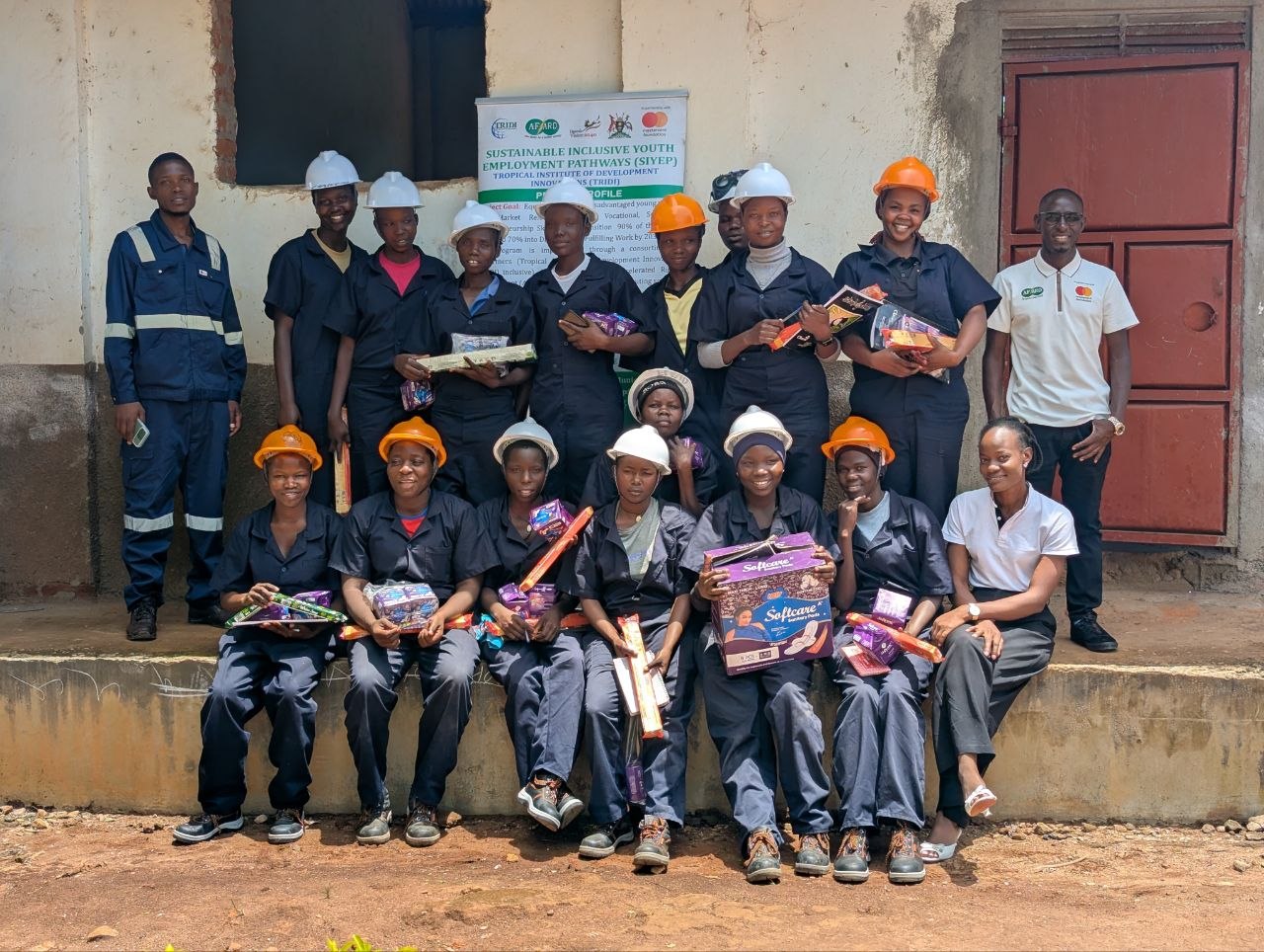
The engagement at Ora Technical Institute focused on 15 young women supported by TRIDI under SIYEP who are pursuing training in male-dominated courses.
On the first day, TRIDI engaged the young women to understand how their training was progressing, identify challenges affecting their learning and establish whether they were receiving the support required to develop practical skills.
The engagement also included formal profiling and enrolment of the 15 participants into the SIYEP project. They were taken through cross-cutting issues including gender, disability, safeguarding and sexual and reproductive health (SRH). As part of the SRH support, each participant received sanitary pads and washing soap.
The learners also had an opportunity to interact with TRIDI and reflect on their experiences in training, including the challenges they face and their aspirations to progress in their respective fields.
Despite some having spent only a relatively short period in training, the young women were able to participate in institutional skills competitions alongside students undertaking formal National Certificate programmes.
That participation provided an opportunity to move beyond asking whether training is taking place to asking a more important question: What can the learners actually do with the skills they are acquiring?
Bringing the community into the conversation
The first day also included a community communication and information-sharing session involving community gatekeepers and community stakeholders.
The gatekeepers included parents, spouses and family members, while stakeholders included local leaders and representatives connected to the institution and the wider community.
The session was attended by leaders including the sub-county chairperson, sub-county chief and LC1 leadership, as well as former workers of the institution and members of the institution’s Parent-Teacher Association (PTA).
The Principal of Ora Technical Institute, Mr. Okoda Booker, also engaged with the TRIDI team on the institution’s experience under the programme, including the selection of participants and the general implementation of the project.
The community session focused on helping parents, spouses and leaders understand the value of TVET and encouraging them to support young people to pursue practical skills.
Particular attention was given to encouraging young women to consider male-dominated trades, helping to challenge the idea that some technical fields are exclusively suited to men.
For TRIDI, community support is an important part of the skills-development pathway. A young person’s ability to enrol and remain in training can be influenced by the support they receive from parents, spouses, families and community leaders.
Young women tell their own stories
The community information-sharing session also created space for the young women supported by TRIDI to share their experiences.
The participants gave testimonies about how their training was progressing, the skills they were acquiring and how they came to pursue their respective courses.
Their testimonies gave parents, spouses, leaders and other community members an opportunity to hear directly from young women who are already pursuing technical and vocational skills.
The stories also demonstrated that TVET is not simply about obtaining a certificate. It can provide young people with practical abilities that can support employment, enterprise and further professional development.
From preparation to competition
After the engagements and preparations on the first day, the focus shifted on the second day to skills competitions at Ora Technical Institute.
The young women reported early in the morning and began competing in practical tasks across five trades: Plumbing, Welding and Metal Fabrication, Electrical Installation, Building and Construction, and Fashion and Design.
The competition tasks were designed to test practical application, accuracy, technical knowledge, creativity and workmanship.
Plumbing: Testing precision through installation
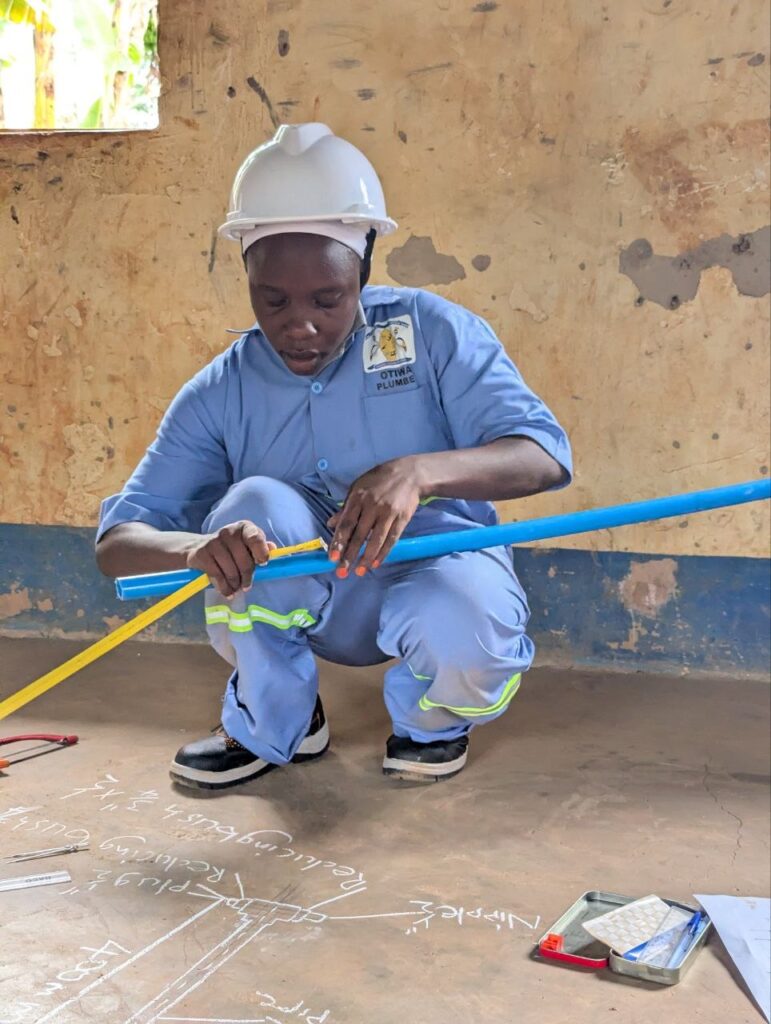
In Plumbing, participants competed in a Shower Head Installation task.
The exercise tested their ability to apply plumbing knowledge to a practical installation, demonstrating the importance of accuracy and proper workmanship in technical work.
Welding and Metal Fabrication: Turning metal into workmanship
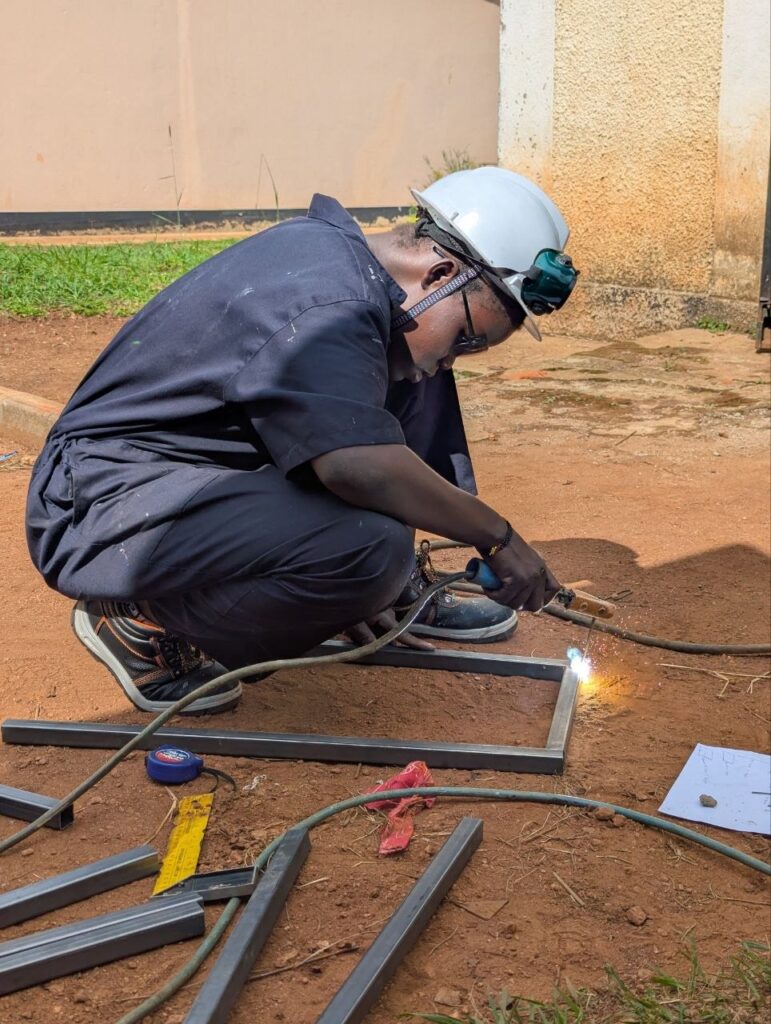
In Welding and Metal Fabrication, participants worked on an Infinite Cube Table.
The task required participants to apply their welding and fabrication skills to produce a practical product, putting their technical knowledge, precision and workmanship to the test.
Councillor Joan, a Welding and Metal Fabrication participant, said the competition went well and expressed hope that one of the participants would progress to the regional competitions and eventually the national level.
She also identified inadequate access to tools as one of the main challenges experienced during the competition, despite the availability of the required materials.
Electrical Installation: Where every connection matters
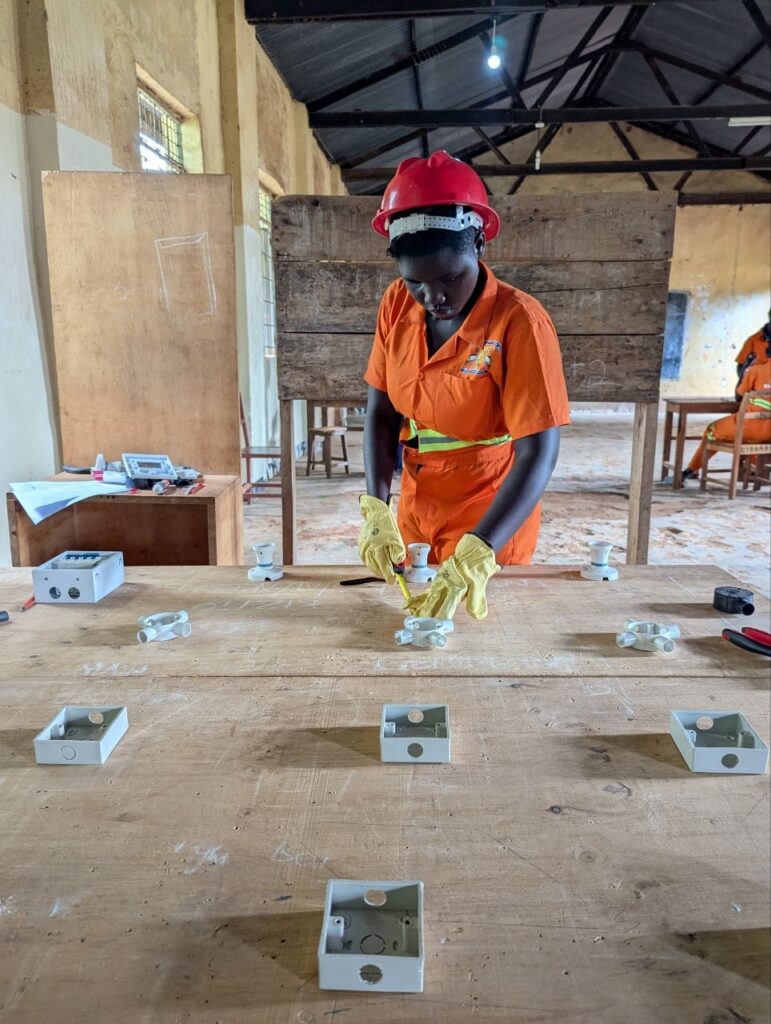
Electrical Installation participants competed in intermediate switching arrangements with three sockets in radial.
The practical task tested their ability to apply electrical knowledge accurately and safely.
Keboko Betty, an Electrical Installation participant, said the course was progressing well and credited the teachers for training the learners effectively. However, she identified limited access to tools as a major challenge.
She explained that work that could be completed within a shorter period can take considerably longer when learners have to share or wait for tools.
Despite the challenge, she expressed confidence in the learners’ ability to progress to higher levels of competition.
Building and Construction: Skills that take shape
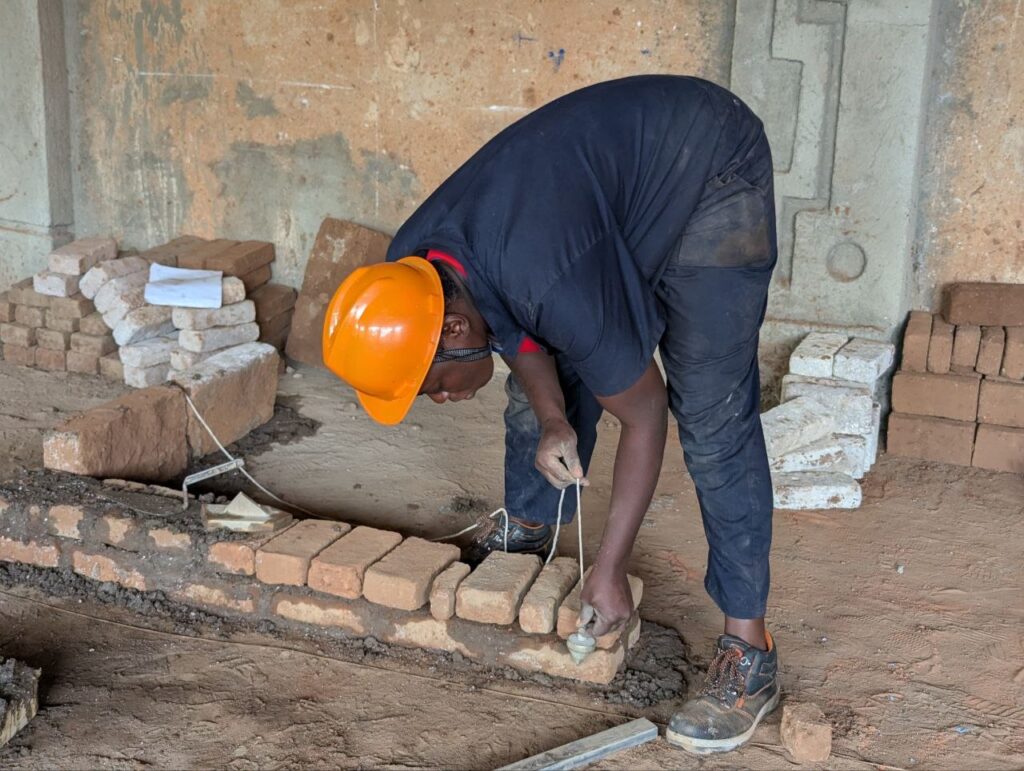
Building and Construction participants competed in constructing a returned-angle wall with an attached block.
The task provided a practical test of construction skills, accuracy and workmanship, demonstrating how classroom learning can be translated into physical structures.
Fashion and Design: Turning creativity into a product
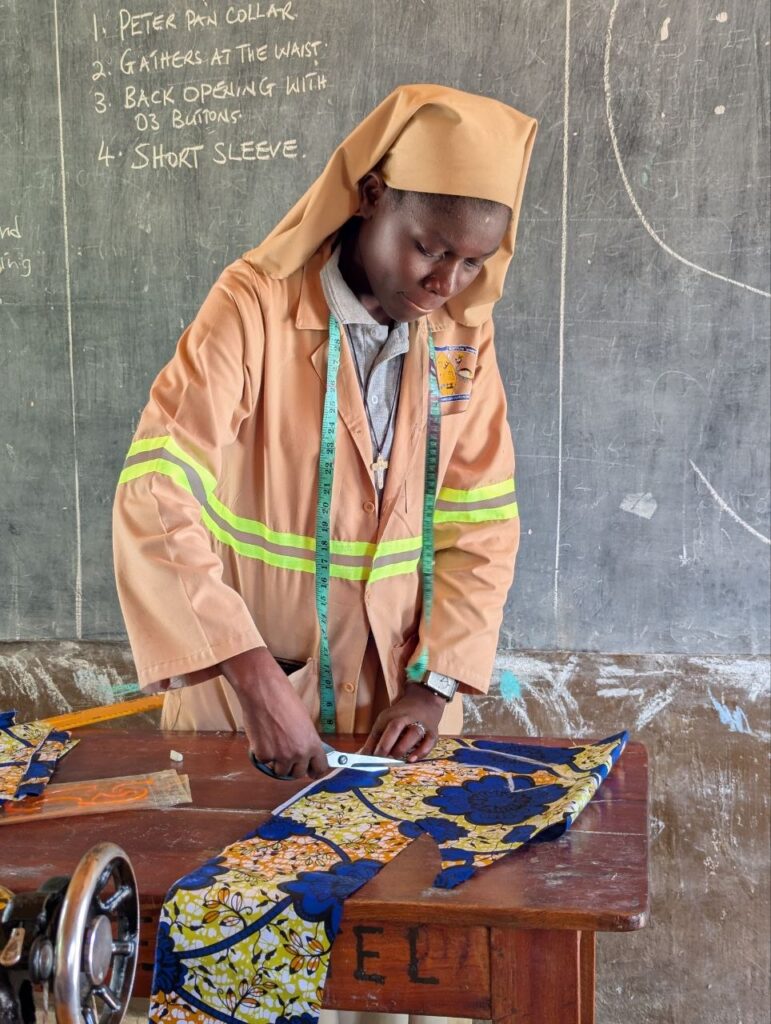
In Fashion and Design, participants demonstrated their skills through the dressmaking of a dress for a six-year-old child.
The task combined creativity with technical execution, showing how fashion training can move from design concepts to finished, usable products.
The tutors see a pathway beyond the competition
For tutors at Ora Technical Institute, the competition is part of a much bigger skills-development journey.
Atukunda Samuel, a tutor in the Electrical Department, said the students have developed substantial knowledge through their training. He noted that the learners are building their skills within a pathway that can lead to industrial training and further education.
In Welding and Metal Fabrication, tutor Pilonyo Franco emphasised the potential for learners to create employment for themselves or access employment opportunities after completing their training.
He noted that some learners could establish their own workshops and produce products that respond to customer demand, while others could work in existing workshops, companies and industries.
This is the wider value of practical skills training: a skill can become a job, a business or a pathway to further learning.
Evidence of progress and challenges that still matter
The two-day engagement produced evidence of both progress and areas requiring further attention.
The young women demonstrated that they can participate in practical skills competitions even while still progressing through their training. Tutors reported that learners are acquiring meaningful knowledge and practical skills, while the participants themselves expressed confidence about continuing to higher levels of competition.
At the same time, the shortage of tools emerged repeatedly as a challenge.
For Betty, limited tools can slow down the completion of practical work. Joan similarly identified insufficient tools as one of the main challenges during the welding competition.
These observations are important because effective skills development requires more than curriculum and instruction. Learners also need access to the tools and equipment that allow them to practise, demonstrate and refine what they have learned.
Preparing for the next level
According to Aloysious Nyehangana, Skills Development Officer at TRIDI, the activities were designed to achieve several objectives: engage the SIYEP-supported young women, formally profile and enrol them into the project, address cross-cutting issues, engage community members and conduct institutional skills competitions.
The skills competitions also form part of preparation for higher-level competitions.
The institutional competition was conducted using practical test items developed for skills competitions, with further preparation and upskilling expected to continue in collaboration with tutors.
The participants therefore have a pathway beyond the institutional level, with continued preparation intended to strengthen their competence ahead of regional competitions and subsequent opportunities.
Beyond winning a competition
For TRIDI, the significance of the competition goes beyond identifying who performs best on the day.
The bigger question is whether young women can move through a pathway that connects training, practical competence, confidence, further exposure, employment and enterprise.
At Ora Technical Institute, the evidence is beginning to show that this pathway can work, but it also shows where continued investment and support are needed.
The testimonies from learners demonstrate growing confidence. The community engagement demonstrates the importance of bringing families and local leaders into the conversation. The competition demonstrates practical ability. The challenges around tools provide evidence of where additional support can strengthen the learning environment.
Together, these elements tell a more complete story of skills development.
The journey does not end when the competition ends.
For the young women at Ora Technical Institute, the competition is another step towards demonstrating what they can do, strengthening their competence and preparing for opportunities beyond the training institution.
Through SIYEP, TRIDI continues to work with young women, TVET institutions, tutors, communities and other stakeholders to strengthen the pathway from skills to competence, competence to opportunity, and opportunity to sustainable livelihoods.