

Independence Beyond the Flag: Building Uganda’s Economic Sovereignty Through Science, Skills and Innovation

By John Jimmy Musimbi
Public Relations & Communications Officer, Tropical Institute of Development Innovations (TRIDI)
As Uganda marks 64 years of Independence under the theme “Embracing Our Sovereignty with Hope and Visionary Leadership,” it is natural to reflect on how far the country has come since 9 October 1962.
Independence gave Uganda the right to determine her own political destiny. But 64 years later, sovereignty must mean more than political self-determination. It must also mean the capacity to produce, innovate, process, create jobs, develop technologies, build industries and generate prosperity from within. This is where science, technology, innovation and practical skills become central to the meaning of independence.
At the Tropical Institute of Development Innovations (TRIDI), this idea is reflected in the work taking place across research, innovation, skills development, agro-processing and, particularly, sericulture.
Uganda’s sericulture journey provides an interesting example of what economic sovereignty can look like in practice. With Government support and oversight, investments have been made to develop a silk industry that can move beyond small-scale production towards commercialisation, industrialisation, employment and export development.
The ambition is significant; establish the technologies, infrastructure, skills and production systems required for Ugandans to participate in the entire silk value chain from mulberry cultivation and silkworm rearing to cocoon production, processing and value addition. This is more than an agricultural project, it is an attempt to build an industry and that distinction matters.
From Government investment to national value
Government has a critical role in creating industries that may require substantial initial investment, research and infrastructure before they become commercially sustainable. But public investment should ultimately be judged by what it enables.
Did it create productive assets?
Did Ugandans acquire the skills to operate them?
Did farmers gain reliable markets?
Did young people find employment or enterprise opportunities?
Did local industries emerge?
Did the country reduce dependence on imported products and technologies?
Did the investment generate knowledge that can be replicated?
These are the questions that should increasingly accompany discussions about development.
TRIDI’s sericulture work demonstrates both the possibilities and the complexity of this journey. The project has established mulberry-growing areas and sericulture stations, invested in processing technologies and supported skills development around the value chain. TRIDI’s stated ambition is to transform sericulture from subsistence into sustainable commercial production, contributing to industrialisation, export development, employment and rural incomes.
The opportunity is therefore much bigger than silk itself, it is about whether Uganda can take scientific knowledge, public investment and local human capacity and turn them into a functioning industry.
Independence must also mean productive capacity
Economic sovereignty does not mean that Uganda should isolate itself from the rest of the world, rather, it means that we should be capable of engaging the world from a position of productive strength.
We should be able to produce competitively, add value locally, develop our own technologies, build skilled human resources and negotiate partnerships that strengthen rather than weaken our domestic productive capacity.
The same principle applies to TRIDI’s work beyond sericulture.
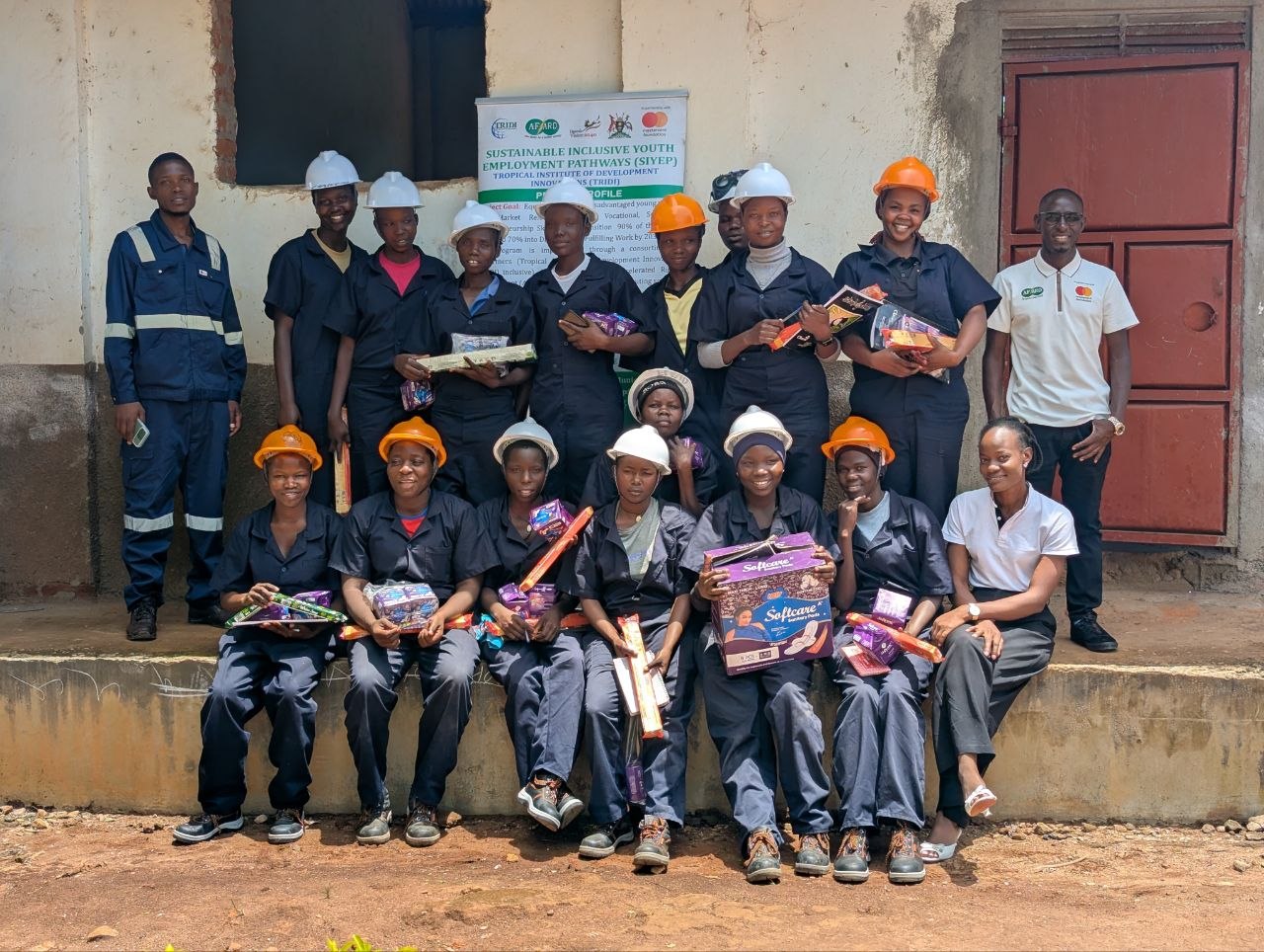
In agro-processing, the focus extends across the coffee value chain, from sorting and processing towards a finished product. In TVET, young people are being exposed to practical skills that can connect learning with employment and enterprise. Through research and innovation, TRIDI is working in areas ranging from crop and livestock improvement to chemical production and other technologies.
These activities may appear different, but they share one objective; turning knowledge into productive capacity. That is an important dimension of sovereignty.
What Government can do better going forward
If Uganda is to fully realise the promise of science, technology and innovation, Government’s role must go beyond financing individual projects.
First, successful innovations need continuity.
Research and industrial projects rarely mature within one financial year. Government should provide predictable, long-term financing frameworks for innovations that demonstrate technical and economic potential. A promising innovation should not lose momentum simply because a funding cycle has ended.
Second, infrastructure must follow innovation.
It is difficult to commercialise an industry without the necessary processing facilities, laboratories, production infrastructure, roads, electricity, water, digital connectivity and other enabling systems.
For sectors such as sericulture, infrastructure across the value chain is particularly important. Producing cocoons is only one stage. The real economic opportunity expands when Uganda can process, add value, manufacture and access markets.
Third, Government should strengthen market linkages.
Production without markets is not sustainable development.
Farmers, young entrepreneurs, TVET graduates and innovators need pathways connecting them to buyers, industries, financial institutions, government procurement opportunities and export markets.
Fourth, skills development must remain connected to industry.
Training should not only produce certificates. It should produce competence.
This is why practical training, workplace exposure, mentorship, skills competitions and engagement with employers matter. Young Ugandans should leave training institutions with skills that can solve real problems and create economic value.
Fifth, public investments must be accompanied by strong accountability and evidence.
When taxpayers’ money is invested in development programmes, citizens should be able to see what was invested, what was achieved, what challenges emerged and what is being done differently.
Accountability should therefore not be understood merely as financial reporting. It should also ask whether public investment is producing the intended development outcomes.
For organisations implementing public programmes, this means documenting not only activities, but results.
What changed?
For whom?
Why did it change?
What evidence demonstrates the change?
And can the model be replicated?
These questions are essential if Uganda is to learn from its investments rather than simply count them.
Visionary leadership must look beyond today
The theme of this year’s Independence Day speaks about hope and visionary leadership. Vision requires us to think beyond immediate outputs.
A visionary approach to Uganda’s development should ask what industries we want to see in the next 10, 20 or 30 years and what must be done today to build them.
If Uganda wants a competitive silk industry, we must think beyond planting mulberry.
If we want an industrial coffee sector, we must think beyond producing coffee beans.
If we want young people to find productive employment, we must think beyond enrolment numbers and certificates.
If we want to become a knowledge-based economy, we must think beyond research papers and ask how research can become technologies, enterprises, products and jobs.
This is where Government, research institutions, private sector actors, training institutions and communities must work together.
From independence to interdependence
Uganda’s next chapter should not be about doing everything alone, it should be about building the capacity to contribute meaningfully to the global economy.
We can partner with international institutions while strengthening local institutions.
We can attract investment while building domestic enterprises.
We can import technologies while developing our own.
We can participate in global markets while increasing the amount of value created here at home.
That is the kind of sovereignty that can give hope to the next generation.
As Uganda celebrates 64 years of Independence, TRIDI’s work offers one small but important reflection of this national journey: our natural resources, scientific knowledge, human skills and innovations can become much more powerful when they are deliberately connected to production, industry and opportunity.
The task before Government and all development actors is therefore not simply to start more projects, it is to build systems that allow good ideas to survive, mature, scale and create lasting value.
Uganda has no shortage of ideas, talent or resources, the challenge and the opportunity is to organise these assets into productive systems that work.
That is how independence can increasingly become economic sovereignty and that is how hope can become opportunity.
Happy 64th Independence Anniversary, Uganda.
For God and My Country.